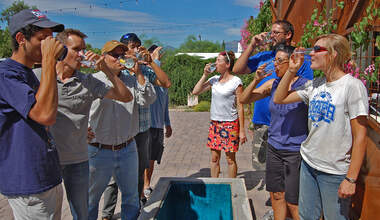
How Low Can You Go? Class Trips to the Living Lab – Winter & Spring, 2026
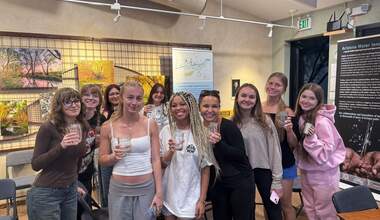
Over 90 students, from 5th graders to University of Arizona undergraduates, visited the Living Lab for the interactive How Low Can You Go? workshop. They explored the many water-saving features of our campus and discussed ways to adopt hydro-local strategies in their homes, schools, and communities.
Living Lab Tours & Special Weekend Events – January-May 2026
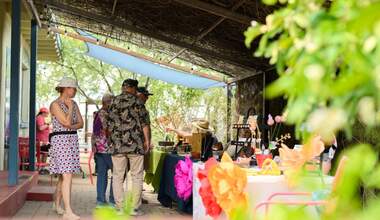
Nearly 100 community members spent part of their weekends at the Living Lab between January and May, 2026! 22 visitors joined our monthly Saturday guided tours of the Living Lab, and 76 visitors attended special weekend events hosted in partnership with groups including the Palo Verde Neighborhood Association and Rotary Club of Tucson Verde.
Plant Kits Distributed! – April 2025-October 2025
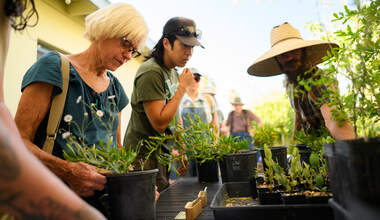
Over 200 hundred native plants have been given out to the community to help cool down and bring nature back into our cities!
A Full Year of Rainwater! – 2024
For the entirety of 2024, we were able met the water needs of our staff and visitors with the rainwater that fell on our campus! When we planned our water budget a decade ago, we figured with average rainfall, 11.3 inches a year in Tucson, we could live on rainwater all year long. And when we say live, we mean everything: washing hands, taking showers, cleaning dishes, doing laundry, watering veggie gardens and fruit trees, growing shade trees, and even drinking water. Everything BUT flushing toilets, which we promptly eliminated from the Living Lab when we first moved into the space over a decade ago and replaced with composting toilets.
Hydro-Local Living – 2016-2023
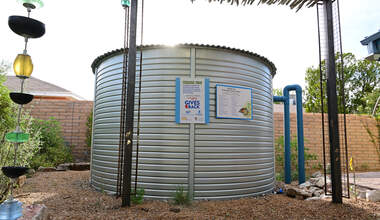
From 2016 - 2023, the Living Lab's water usage was an average of 86 gallons/day for a dozen staff members and 3000 annual visitors. We supplied 74% of our annual water use from rainwater and 26% from municipal sources. We had 4000 square feet of guttered roof area directed to our 10,000 gallons of rain tank storage capacity. Over this time period, the Living Lab received 4 to 15 inches of rain per year.